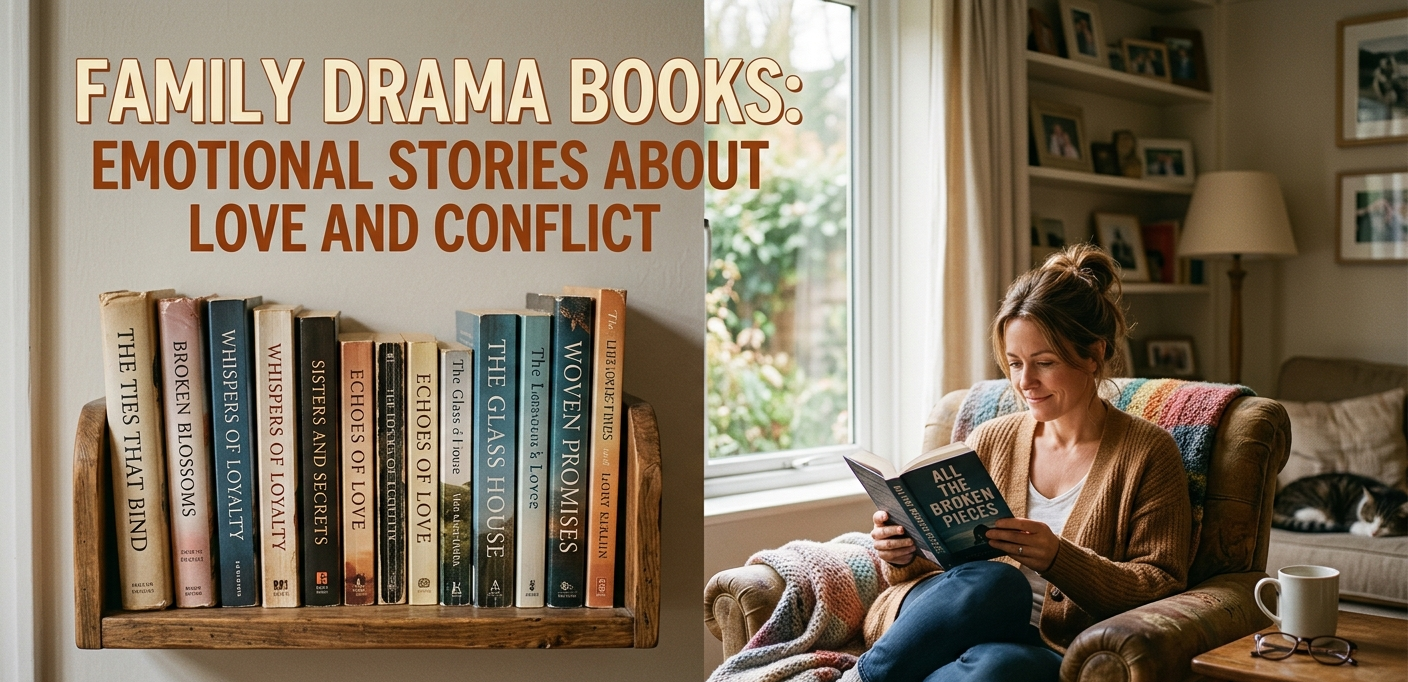
Not all stories begin with a mystery or a grand event. Some begin quietly—inside homes, between conversations, within relationships that appear ordinary from the outside. That is where the most powerful books about family drama often live.
A family drama books narrative does not rely on spectacle. Instead, it builds tension through relationships through what is said, what is avoided, and what is carried across generations.
At the center of many of these stories are books about family secrets, where hidden truths slowly surface and reshape everything readers thought they understood about the characters.
What Are Family Drama Books?
Understanding the Genre
Family drama is a genre of fiction that focuses on the emotional and relational dynamics within families. These stories explore:
- Conflict between family members
- Generational differences
- Love mixed with resentment
- The long-term effects of past decisions
Unlike fast-paced thrillers, these novels are character-driven. The tension comes not from external events, but from emotional complexity.
Why Readers Connect With Family-Based Stories
There is a reason why readers consistently return to a book about a family.
Every reader understands family—even if their experiences are different. These stories reflect:
- Imperfect relationships
- Unspoken expectations
- Emotional bonds that cannot be easily broken
In fact, many popular novels in modern literature explore family conflict, showing both “heartache and the enduring power of familial love.”
The Role of Conflict in Family Drama Books
Love and Conflict Exist Together
One of the defining characteristics of this genre is that love and conflict are not separate—they coexist.
Families are built on connection, but they are also shaped by:
- Misunderstandings
- Betrayal
- Silence
- Emotional distance
This is why books about family drama feel so real. They do not simplify relationships; they show them as they are.
How Conflict Drives Emotional Depth
Conflict is not just tension it is what allows characters to evolve.
In strong family narratives:
- A disagreement becomes a turning point
- A secret becomes a revelation
- A loss becomes a transformation
This is what gives these stories emotional weight and lasting impact.
Books About Family Secrets: The Heart of Family Drama
Why Secrets Matter in Storytelling
Secrets are one of the most powerful tools in family fiction.
They create:
- Suspense
- Emotional tension
- Character development
More importantly, they reveal how families function beneath the surface.
In many cases, secrets are not just plot devices they are emotional realities that shape identity and relationships.
The Long-Term Impact of Hidden Truths
A defining feature of books about family secrets is how past actions continue to affect present lives.
These stories often explore:
- Generational trauma
- Inherited behaviors
- Emotional patterns passed down over time
Readers are drawn to these narratives because they reflect a deeper truth: families are shaped not only by what is known, but also by what is hidden.
What Makes a Family Drama Book Truly Memorable
1. Strong Character Development
The best stories focus on people, not just events. Characters feel real, flawed, and emotionally layered.
2. Emotional Authenticity
Readers can tell when emotion is forced. Memorable stories present feelings honestly without exaggeration or simplification.
3. Multi-Generational Perspective
Many impactful family dramas explore more than one generation, showing how the past influences the present.
Popular family drama novels often highlight “ties of love and responsibility that bind families together across time.”
4. Realistic Outcomes
Not every story ends neatly. Some questions remain unanswered, and some relationships remain unresolved—just like real life.
Bonnie MacDougall’s Approach to Family Drama
In modern literary fiction, Bonnie MacDougall’s work reflects many of these defining qualities.
Her novels focus on:
- Emotional complexity
- Psychological realism
- The lasting impact of family relationships
Rather than offering simple narratives, her stories examine how love, identity, and conflict intersect within families.
A Different Kind of Family Story
In her work:
- Secrets are not revealed for shock—they are explored for meaning
- Relationships are not idealized—they are examined
- Emotions are not rushed—they are allowed to unfold
This approach aligns closely with what readers seek in meaningful books about family drama.
Why Family Drama Books Continue to Matter
Reflection of Real Life
Family stories remain relevant because they mirror real experiences.
No family is perfect, and many stories highlight that truth showing both dysfunction and connection.
Emotional Understanding
These books allow readers to better understand:
- Their own relationships
- Their past experiences
- Their emotional responses
This makes the reading experience not just engaging, but also reflective.
Conclusion
Family drama books are not about dramatic events they are about emotional truth. They explore how love and conflict exist together, shaping relationships over time.
The most powerful stories do not provide easy answers. Instead, they ask difficult questions:
- What defines a family?
- How do secrets shape identity?
- Can relationships ever fully heal?
Through this lens, books about family secrets and emotional storytelling continue to resonate deeply with readers.
For those seeking stories that reflect real life—with all its complexity, tension, and quiet moments of understanding—family drama remains one of the most meaningful genres in modern fiction.
FAQs
What are books about family drama?
Books about family drama are stories that focus on relationships, conflicts, and emotional dynamics within families, often exploring themes like love, betrayal, and identity.
Why are family drama books so relatable?
They reflect real-life experiences. Since everyone has some form of family structure, readers naturally connect with these stories.
What role do family secrets play in these stories?
Family secrets create tension and drive the narrative. They often reveal deeper emotional truths and shape character development.
Are family drama books always serious?
Not always. While many are emotional, some include humor and lighter moments, reflecting the full range of family life.
Why do these stories stay with readers?
Because they deal with universal themes love, conflict, and identity making them both personal and memorable.